The dedication community college librarians bring to their work is perfectly exemplified by Michael LaMagna. Balancing teaching, workshops, reference support, and collection development with strategic initiatives and OER, he wears many hats. Most importantly, he manages all of these responsibilities while keeping students at the very center of his work.
Michael is the founder and Co-Chair of CCCOER’s Research & Impact Committee, an organizer of the Community College LINK conference for those working in community and junior college libraries throughout the Commonwealth of Pennsylvania, and I learned recently, he’s also a host for the New Books Network! He’s helping to shape a pathway where not only does OER contribute to affordability, but also looks beyond to outcomes that are data and student-focused. Whether it’s on his campus or with the wider CCCOER community, Michael’s work shows the impact librarians can have when they bring their passion and expertise together.
Heather Blicher, CCCOER Director
Can you tell us about your role at Delaware County Community College? What does a typical day or week look like for you?
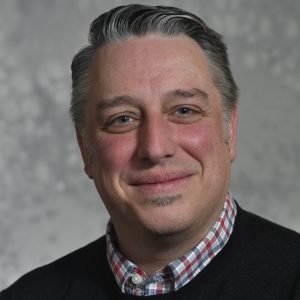
In my current position, I serve both as a faculty librarian and as the Information Literacy Program and Library Services Coordinator. As a faculty librarian, my work includes teaching information literacy sessions and synchronous research workshops, providing reference and research support to students, and contributing to collection development to ensure the library’s resources effectively support curricular and research needs. I also participate broadly in the scholarly and service activities associated with academic librarianship.
In my coordinator role, I provide strategic leadership for the library’s information literacy program, overseeing curricular integration, workshop programming, and assessment initiatives. I collaborate with faculty, administrators, and campus partners to strengthen students’ research competencies and to advocate for the central role of library services in supporting teaching, learning, and student success. As I collaborate with faculty, administrators, and campus partners, I am able to advocate for OER across campus.
What parts of your work do you find most meaningful or energizing?
The most meaningful aspect of my work is the opportunity to engage with students on a daily basis. I am particularly energized when teaching information literacy sessions or working with students at the reference desk, where I can help them navigate the complexities of today’s information landscape. These interactions often lead to deeper conversations about the social, ethical, and intellectual implications of information beyond the classroom context.
Increasingly, I am seeing students demonstrate a heightened awareness of issues such as confirmation bias and the influence of algorithms on their information‑seeking behaviors. Supporting students as they critically examine these topics and as they develop the skills to become more discerning, reflective researchers continues to be one of the most rewarding dimensions of my role.
Are there any projects, initiatives, or accomplishments you’re especially proud of right now?
Recently, I collaborated with my colleague, Louise Feldmann, who presented for the Research & Impact Committee’s 2024 Summer Conversation, to advance the implementation of course marking at our institution. This initiative required extensive cross‑campus engagement, including consultations with faculty, staff, and administrators to build awareness of the pedagogical value of course marking and to secure broad institutional support.
We partnered closely with the Information Technology Department to evaluate the capabilities of our course registration system and to determine the technical requirements necessary to enable course marking. Following these discussions and system assessments, we developed and submitted a formal proposal through our shared governance process, ultimately securing approval to move the initiative forward. Our hope is this will provide us with data to better inform our open efforts moving forward.
How does your work connect to students, faculty, or your broader campus community?
Working at a community college means that my work is deeply and directly connected to students, faculty, and the broader community, as teaching and learning lie at the heart of our mission. This commitment shapes every aspect of my role, whether I am teaching information literacy classes, supporting students at the reference desk, or collaborating with faculty to strengthen our collections and develop new learning initiatives. The immediacy of these connections and the tangible impact on student success make community college librarianship both meaningful and energizing.
What perspectives or experiences from your role do you bring with you into your work with CCCOER?
Recognizing the critical role of data‑informed decisionmaking in higher education, I bring this perspective to my work with the Research & Impact Committee for CCCOER. As a committee, we intentionally center our professional development programming and discussions on course marking and on articulating the demonstrable benefits of open educational resources (OER) for students. Our conversations extend beyond traditional metrics such as cost savings to include the broader impacts of OER, including issues of belonging and representation within open texts, as well as the academic outcomes associated with equitable access to course materials. This data‑driven, student‑centered approach continues to guide our efforts to support CCCOER members in adopting and sustaining effective OER practices.
What excites you most about serving in a leadership role with CCCOER?
One of the most rewarding aspects of my involvement with CCCOER is the opportunity to collaborate with the exceptional members of the Executive Council and the Research & Impact Committee. The breadth of perspectives each person brings to any of our discussions, the innovative initiatives that everyone is engaging in on their respective campuses, and the deeply collaborative nature of our collective work are continual sources of inspiration. Engaging with colleagues who are so committed to advancing OER at community colleges continues to excite me.
Looking ahead, what do you see as an opportunity for the CCCOER community in the next few years?
CCCOER has earned a strong reputation across community colleges and within the broader Open Education community for its high‑quality professional development programming and its consistent recognition of exemplary work taking place at member institutions. With the recent adoption of a new strategic plan and the introduction of a formalized program guide, this work is well positioned to continue with even greater clarity and focus. I know that CCCOER will expand its visibility in the wider Open Education landscape, continuing to advance critical conversations and support meaningful progress in the field.
What’s a book, podcast, or article you’ve enjoyed recently?
While I probably should highlight the books currently on my reading list, I find myself especially drawn to podcasts that explore futures thinking and strategic foresight that challenge our traditional assumptions about where we are heading in the near and distant horizons.
Two podcasts I highly recommend in this space are FuturePod and The Wicked Opportunities Podcast. Both offer thoughtful conversations on a range of topics that help as I think about the plausible and possible futures of academic libraries, higher education, and the open movement.
Coffee, tea, or something else to fuel your day?
I am an avid tea enthusiast, whether it is loose‑leaf hot tea with honey or freshly brewed iced tea. It is not uncommon to see me arrive on campus each morning with two large travel mugs of homemade iced tea in hand which fuels my work throughout the day.
If you weren’t working in higher ed, what would your dream job be?
This is something I have been thinking about recently and truthfully, I cannot imagine working in any other space. Being able to engage in my work as an academic librarian is my dream job.